I Watch Brilliant Black Women Speak. And I Keep Noticing Their Tongues.
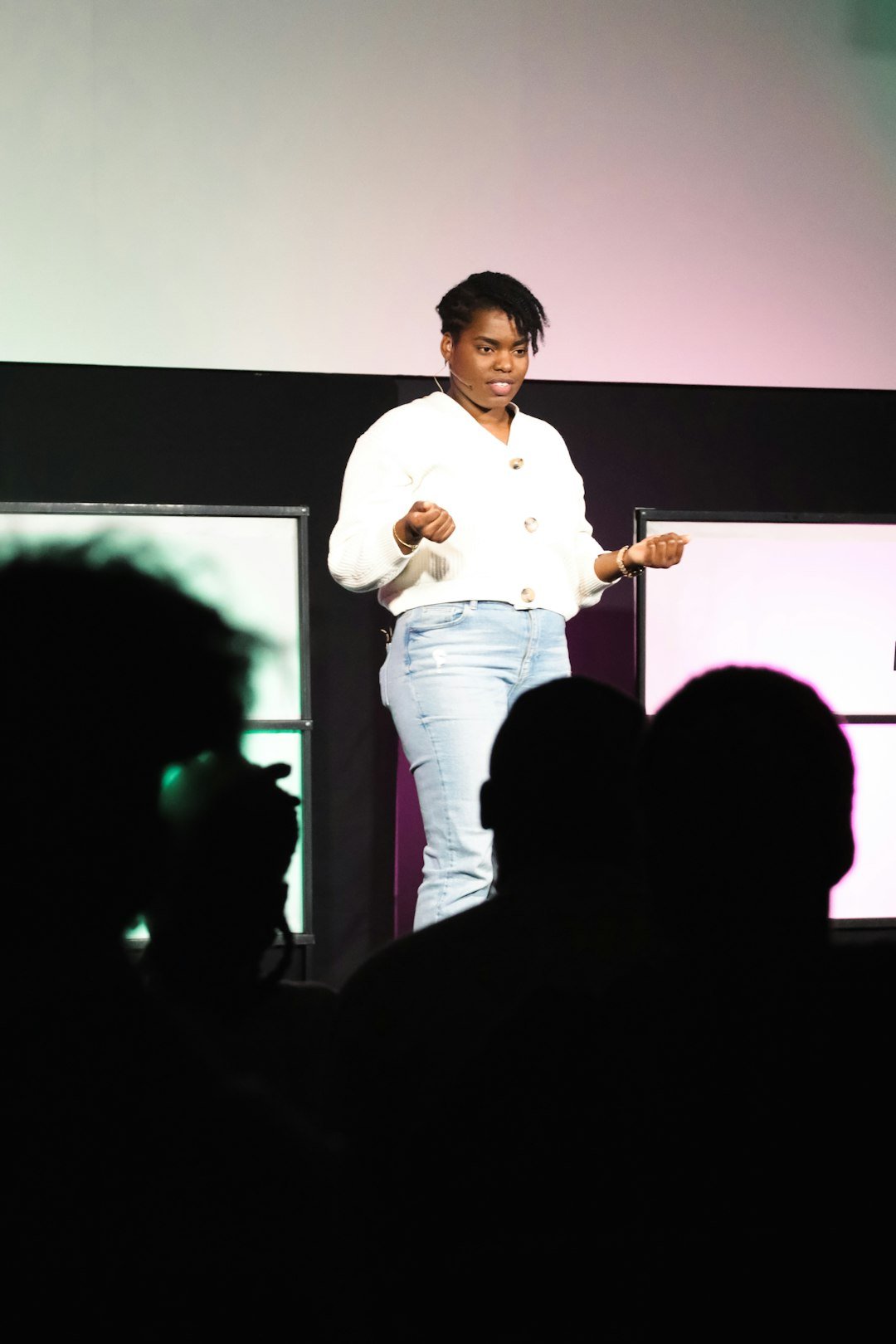
I watch a lot of brilliant, successful Black women speak. On panels. In interviews. In TED talks. In the kinds of rooms that don't always let us in and certainly don't always listen when we arrive.
I watch them because I see them in me — the ones who carry their knowledge with a particular kind of authority, who have clearly been through something and came out with even more fire on the other side.
But I am also an acupuncturist.And I cannot turn that off.
So while I'm watching these women — absorbing what they're saying, taking notes, feeling genuinely inspired — I am also quietly, involuntarily, clinically noticing their tongues.
No judgment. I promise. A tongue in any given moment is just a snapshot. A data point, not a verdict.
But when I see the same pattern over and over again in the same population — I pay attention.
WHAT I KEEP SEEING
The tongue is extremely pale.
Sometimes it's almost white. Sometimes it's just drained of the healthy pink that should be there. Often it's thick — what we call a swollen or puffy body — with a white coating that lies heavy across the surface.
In Chinese medicine, this is a recognizable clinical picture.
And once you know what it means, it stops being surprising.
It starts being heartbreaking.
---
WHAT A PALE TONGUE IS ACTUALLY SAYING
In Traditional Chinese Medicine, tongue diagnosis is one of the oldest and most reliable diagnostic tools we have. The tongue reflects the state of your internal organs, your blood, your fluids, your Qi — and it does so in real time, without a lab panel or an insurance authorization.
A healthy tongue is pink. Moist. Lightly coated. Neither too thick nor too thin.
A pale tongue — especially one that is swollen or puffy with a white coating — tells a specific story.
It says: Blood deficiency. Spleen Qi deficiency. Internal cold.
In plain language: the body is not producing enough nourishment to sustain itself. The Spleen — the organ system that transforms food and experience into blood, energy, and vitality — is depleted. The blood that should be circulating warmth and nourishment to every tissue, every organ, every cell is thin. Not enough.
The coating tells us the Spleen is struggling to transform dampness — that what comes in (food, stress, experience) is not being fully processed and cleared. It is accumulating instead of moving.
This is not a character flaw. It is not a lifestyle failure.
It is a body that has been giving more than it has been receiving, for longer than is sustainable.
WHY THIS KEEPS SHOWING UP IN BLACK WOMEN SPECIFICALLY?
Here is where I have to be direct.
The research on what racial stress does to the body is no longer emerging — it is established.
Arline Geronimus's Weathering Hypothesis documented what Black women have known in their bodies for generations: chronic exposure to racial stress causes accelerated biological aging. The allostatic load — the cumulative physiological cost of navigating racism, discrimination, and hypervigilance — shows up in telomere length, in cortisol patterns, in inflammatory markers, in the body's ability to regulate its own systems.
Black women between 48 and 60 showed biological aging comparable to white women a full decade older.
That is not showing up just in lab work.
It is showing up on the tongue.
Because the Spleen in Chinese medicine is not just the organ that digests your food. It is the organ that digests your experience. It processes what you take in — emotionally, socially, spiritually — and transforms it into something the body can use.
When what you are taking in is a healthcare system that doubts your pain. A workplace that questions your competence. A world that asks you to make yourself smaller so other people can feel more comfortable. A body that has been on high alert for so long it has forgotten what rest feels like.
The Spleen cannot keep up with that load.
The blood gets thin.
The tongue goes pale.
The Cold, Raw, Disingenuous Environment
There is something else worth naming.
In Chinese medicine, internal cold — which contributes directly to Spleen Qi deficiency and pale tongue — is not just about temperature. It is about the quality of the environment the body has been living in.
Cold environments. Raw environments. Environments that do not nourish.
I think about what it means to move through a healthcare system that was not built for you — that has historically experimented on Black bodies, undertreated Black pain, and dismissed Black women's knowledge of their own symptoms.
That is a cold environment.
Cold seeps in when you are not seen. When the care is clinical but not caring. When you leave an appointment feeling more alone than when you walked in.
The body absorbs that.
It shows up on the tongue as surely as eating ice cold food every day would.
This is not metaphor. This is physiology meeting lived experience — which is what Chinese medicine has always understood, even before we had language for epigenetics and allostatic load to confirm it.
What This Means Clinically — And What Helps
Knowing what your tongue is telling you is one thing. Walking through the actual healing — the food changes, the nervous system work, the unlearning of a lifetime of being told to push through — that is a different kind of work. And it is work that goes faster, lands deeper, and sticks longer when you have someone in your corner who has been through it herself.
That is what 1:1 work with me is for.
Not a seven-minute appointment where you leave with a supplement recommendation. A real working relationship — where we look at your full pattern, your full story, and build something that actually fits your body and your life.
An accountability partner who looks like you. Who has sat with the same exhaustion, the same dismissal, the same "your labs are normal" while feeling anything but. Who understands exactly what that pale tongue is carrying — and knows what to do about it.
If you are reading this and recognizing yourself — the fatigue that doesn't resolve with sleep, the digestion that has been off for years, the feeling of being cold from the inside, the brain fog, the difficulty feeling full even after eating, the sense of being depleted in a way that a vacation doesn't fix — this is worth paying attention to.
Blood deficiency and Spleen Qi deficiency are treatable. Not with a supplement stack. Not with elimination diets. With consistent, targeted nourishment.
Warm, cooked foods consistently. The Spleen's fire — its ability to transform what you eat into blood and energy — is already running low. Cold foods, raw foods, iced drinks demand extra digestive energy your Spleen cannot spare. Warm soups, stews, cooked grains, root vegetables. This is not restriction. This is support.
Iron-rich, blood-building foods. Dark leafy greens lightly cooked, red meat if you eat it, beets, black beans, kidney beans, eggs, dark cherries, bone broth. These are the foods TCM has used for centuries specifically to rebuild blood.
Sweetness — the real kind. The flavor associated with the Spleen is sweet — not refined sugar, but the natural sweetness of cooked sweet potato, squash, dates, cooked carrots. Small amounts, consistently. This is the Spleen's nourishment.
Rest that is actually rest. For women who have been taught to override their body's signals to function, this is the hardest prescription. But Spleen Qi rebuilds during stillness. Sleep. Meals eaten sitting down without a screen. Moments where you are not producing or performing or managing anything.
Acupuncture/Acupressure. Spleen 6, Stomach 36, Ren 12, Heart 7 — these points directly tonify Qi and Blood, warm the Spleen, and calm a nervous system that has been on alert for too long. This is targeted clinical work, not generic wellness.
A Note on Judgment
I want to return to something I said at the beginning.
No judgment. Ever.
The tongue I am describing is not the tongue of a woman who has made poor choices. It is the tongue of a woman who has been doing an extraordinary amount with insufficient support for a very long time.
The brilliant woman on the panel. The one holding the room. The one whose clarity and articulation and sheer presence makes you want to take notes.
She deserves care that meets the full complexity of what her body has been carrying.
Not a seven-minute appointment.
Not a lab panel that comes back "normal" when she feels anything but.
Medicine that sees her — the whole her — and knows exactly what to do.
That is what I am here to build.