Chinese Medicine for Black Women: Why Your Body Isn't the Problem
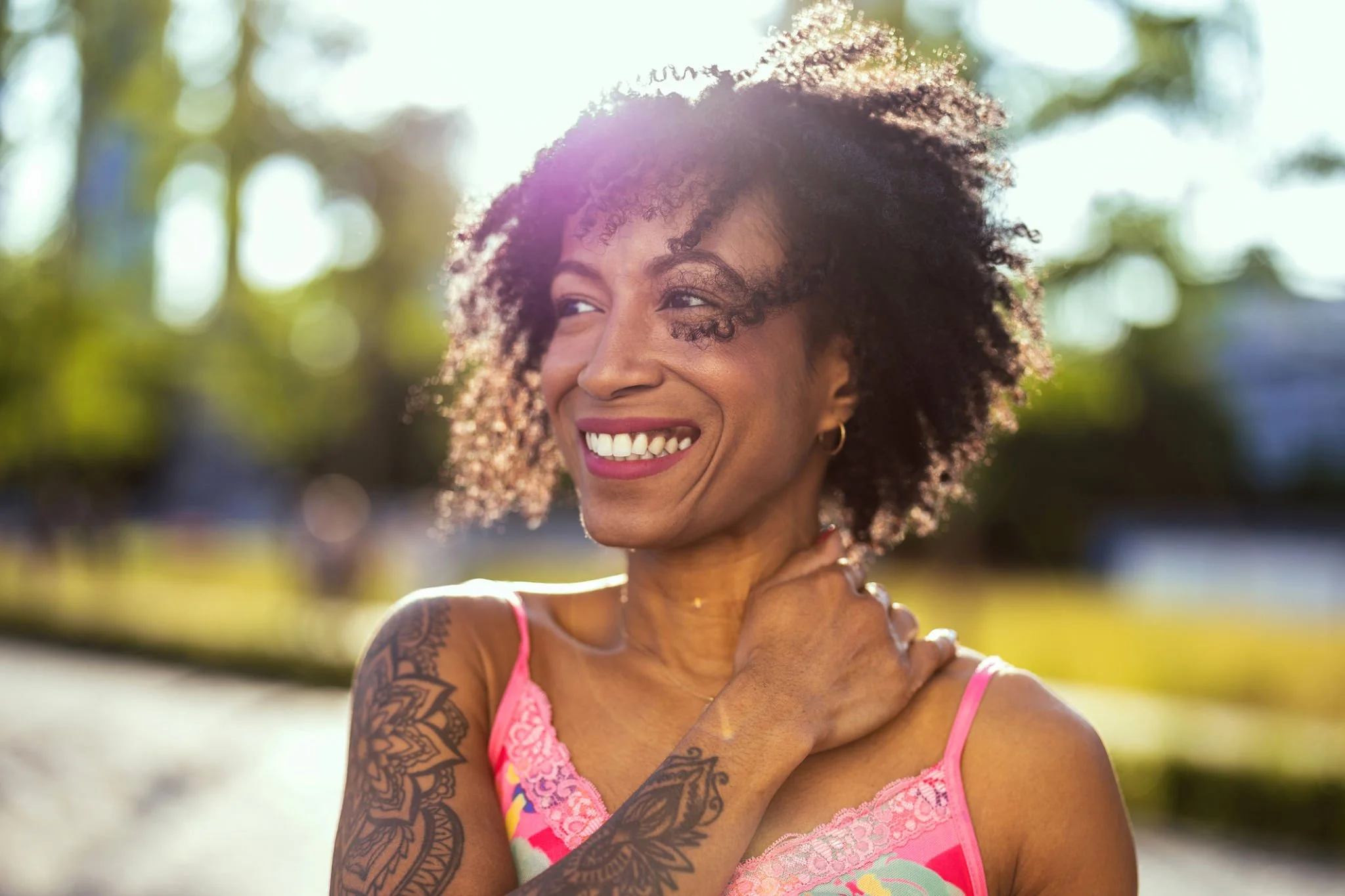
Your Body is The Solution
If you've spent any time navigating the conventional medical system as a Black woman, you already know: the problem is rarely your body.
It's the assumption that your pain threshold is higher. The dismissal when you say something is wrong.
The statistics that show Black women's health deteriorates faster — not because of biology, but because of what the body absorbs when it is chronically unseen, underdosed, and disbelieved.
Chinese medicine, at its best, offers something different: a framework for understanding what your body has been carrying, and clinical tools for helping it put some of that down.
This post is about what that actually looks like — practically, biologically, and in the room; cause I’ve been on both sides - practioner and patient.
THE RESEARCH FIRST: YOUR BODY IS RESPONDING TO SOMETHING REAL
The Weathering Hypothesis, developed by researcher Arline Geronimus, established something that Black women have known in their bodies for generations: racial stress causes premature biological aging.
The allostatic load — the cumulative biological cost of navigating racism, discrimination, and chronic stress — ages Black women's cells measurably faster than white women's cells.
The research found that Black women between 48 and 60 showed biological aging comparable to white women a full decade older.
We might look younger cause black don’t crack on the outside, but our bodies are telling a different story on the inside.
This is not a metaphor. It shows up in telomere length.
In cortisol patterns.
In inflammatory markers.
In the body's abilitytoregulate its own systems.
When we talk about holistic health for Black women, we are talking about a body that is responding to something genuinely difficult — and doing so with remarkable sophistication. The fatigue, the dysregulation, the conditions that don't respond to standard treatment — these are not failures of your body. They are its adaptation.
Chinese medicine's job is to work with that adaptation, not pathologize it.
WHAT HOLISTIC ACTUALLY MEANS
The word gets used loosely. For the purposes of this post, holistic means: medicine that treats the whole person — physical, emotional, spiritual — and that understands the body as inseparable from the context it lives in.
That context, for Black women in America, includes:
A healthcare system with documented racial bias in diagnosis, treatment, and pain management.
Chronic activation of the stress response from navigating racism daily — what researcher William Smith calls Racial Battle Fatigue.
Multigenerational patterns of loss, displacement, and survival that the body carries even when the conscious mind has moved on.
The physical toll of caretaking without reciprocal care — for family, for community, for everyone except yourself.
Medicine that doesn't account for these realities isn't holistic. It's just alternative.
WHAT TRADITIONAL CHINESE MEDICINE SEES THAT WESTERN MEDICINE MISSES
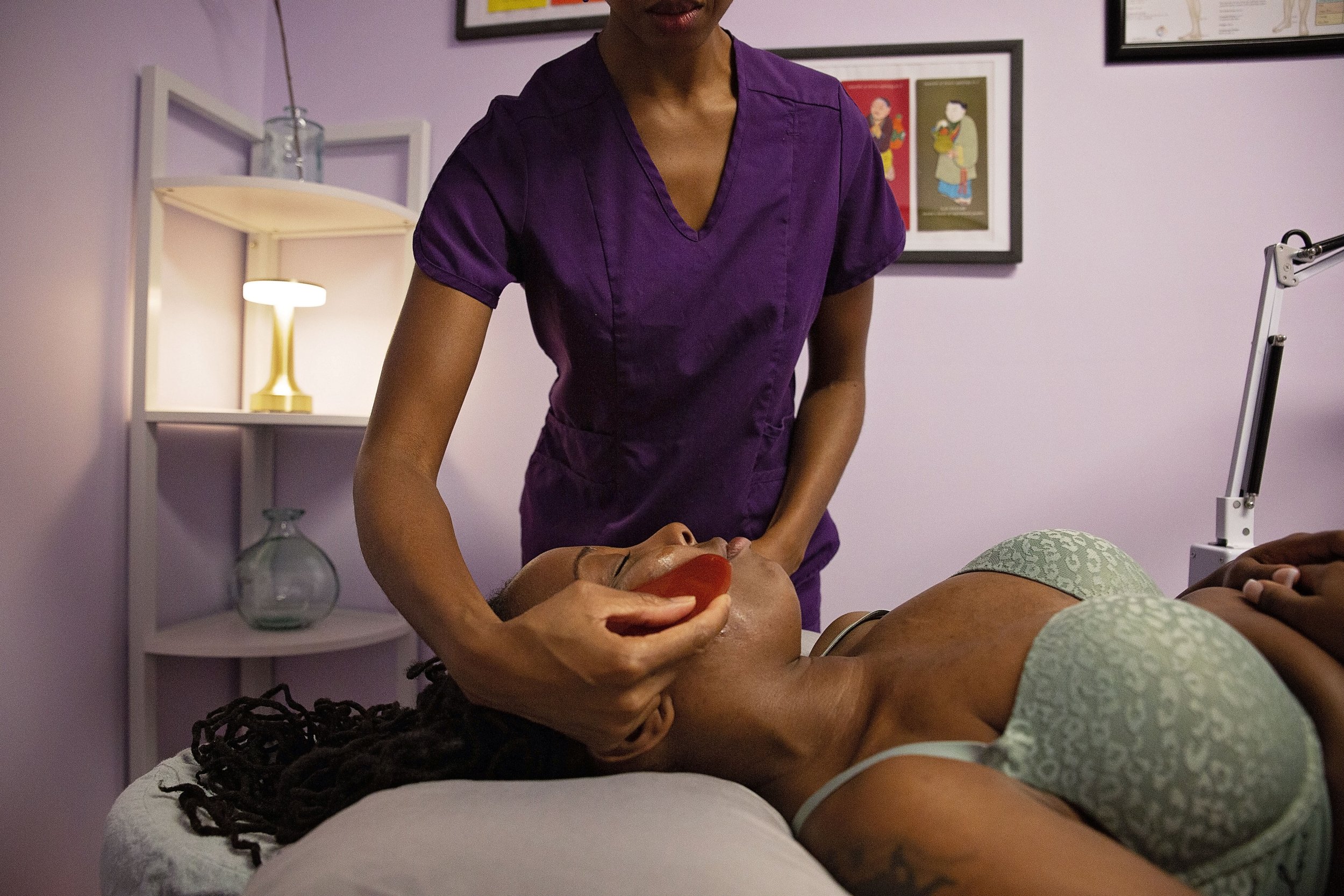
Traditional Chinese Medicine (TCM) has been mapping the relationship between emotional experience and physical health for over two thousand years. Not as metaphor — as clinical observation.
The Spleen system in TCM governs nourishment: the body's ability to take in what it needs and transform it into energy, blood, and vitality.
Chronic worry, overgiving, and lack of reciprocal nourishment deplete Spleen Qi. The result: fatigue that doesn't resolve with rest, digestive irregularities, difficulty concentrating, a body that feels heavy and unmoved.
These symptoms are common across the population. They are strikingly common in Black women — for reasons that aren't mysterious when you understand what the Spleen system is tracking.
The Heart system governs the shen — the spirit — and its capacity for joy, connection, and safety.
When the Heart is disturbed by ongoing stress, grief, or the vigilance required to navigate an unsafe world, you see: insomnia, anxiety, emotional numbness, difficulty feeling pleasure, a persistent sense of disconnection from yourself.
TCM has points for this. Specific, named points on specific channels. The treatment isn't generic wellness — it's targeted clinical intervention for what the body is actually holding.
THE FIVE ELEMENTS AND SEASONAL HEALTH
One of the most practical frameworks in TCM is the Five Element system (whoop whoop- that my training), which maps the body's physiology onto the natural seasons. Each season has a corresponding organ system, emotional tone, and set of practices that support health during that time.
Summer corresponds to the Fire element — the Heart and Small Intestine. Summer is the season of maximum expansion, connection, and joy. When the Fire element is in balance, you feel alive, open, present, and capable of pleasure that isn't earned or conditional.
When it's out of balance — depleted by stress, overwork, or the effort of being perceived as less than you are — you feel anxious, restless, disconnected from joy, and exhausted in a way that sunlight doesn't fix.
Summer is also when the gap between how you feel and how you're "supposed to" feel in this season becomes most visible. You notice that other people seem lighter. That something in you can't quite arrive.
This is clinically addressable. It's not a character flaw.
PRACTICAL HOLISTIC APPROACHES THAT SUPPORT BLACK WOMEN'S HEALTH
Acupuncture. Especially for: nervous system regulation, fibroids, menstrual pain, fatigue, anxiety, insomnia, and chronic pain. Look for a practitioner who understands racial health disparities — or who is willing to learn.
Seasonal eating. In summer, the body benefits from cooling, hydrating foods that support the Heart: bitter greens, red and orange foods, watermelon, cucumber, rose and hibiscus teas. This isn't restriction — it's working with what the body is already trying to do.
Nervous system practices. HeartMath coherence breathing is one of the most well-researched tools for regulating Heart Rate Variability — the physiological measure of nervous system flexibility. Two to five minutes a day changes your baseline more than you think.
Somatic awareness. Learning to notice what your body is doing — not to fix it, but to hear it — is a foundational practice. For women who have been taught to override physical signals to function, this is the work that makes everything else work.
Community and reciprocal care. This is not soft advice. Social connection is one of the strongest predictors of longevity and disease resistance. Being known, seen, and cared for — not as a caretaker but as a person — is physiologically protective.
WHAT SOVEREIGNTY LOOKS LIKE AS A HEALTH OUTCOME
In my practice, I track a different kind of outcome than symptom resolution.
The goal isn't a Black woman who has managed her fibroids. It's a Black woman who trusts her own body, knows what it needs, and no longer has to outsource her sense of what's happening inside her to a practitioner or a diagnosis.
That's sovereignty. It's not a destination — it's a practice. And it's one of the things that holistic medicine, done well, can actually build.
Your body has been working to protect you. The conditions you're carrying aren't signs of failure. They're signs of a body doing its job in hard conditions.
The question holistic medicine asks is: now that you're somewhere safer — even if that safety is partial, even if it's still being built — what does your body need to put some of this down?
That's worth finding out.